Understanding how solar storage works begins with a simple question: how does a solar energy battery work? Solar panels produce direct current when sunlight reaches their cells. An inverter then converts this electricity into usable alternating current for household appliances. If production exceeds demand, a battery stores the extra energy instead of sending all of it to the grid.
Inside the battery, chemical reactions hold electrical energy for later use. Lithium iron phosphate batteries are common because they offer strong cycle performance and stable thermal behavior. A battery management system monitors voltage, temperature, and charge levels. It helps protect the cells during charging and discharging. At night, the system reverses the process. Stored energy flows through the inverter and powers lights, refrigerators, or a heat pump.
The details matter. Battery capacity is measured in kilowatt-hours, while power describes how much electricity it can deliver at once. Efficiency, usable capacity, installation conditions, and warranty limits all affect real performance. An experienced installer should check household consumption, roof output, local temperatures, and electrical requirements before recommending a system. Manufacturer data is useful, but it is not the whole story. Real homes have cloudy days, sudden appliance loads, and aging components.
Some explanations make batteries sound effortless. They are not. A poorly sized system may leave energy unused or fail during peak demand. Even this overview has limits, because battery chemistry and control software vary by model. Reading the technical datasheet and consulting a qualified professional remain sensible steps.
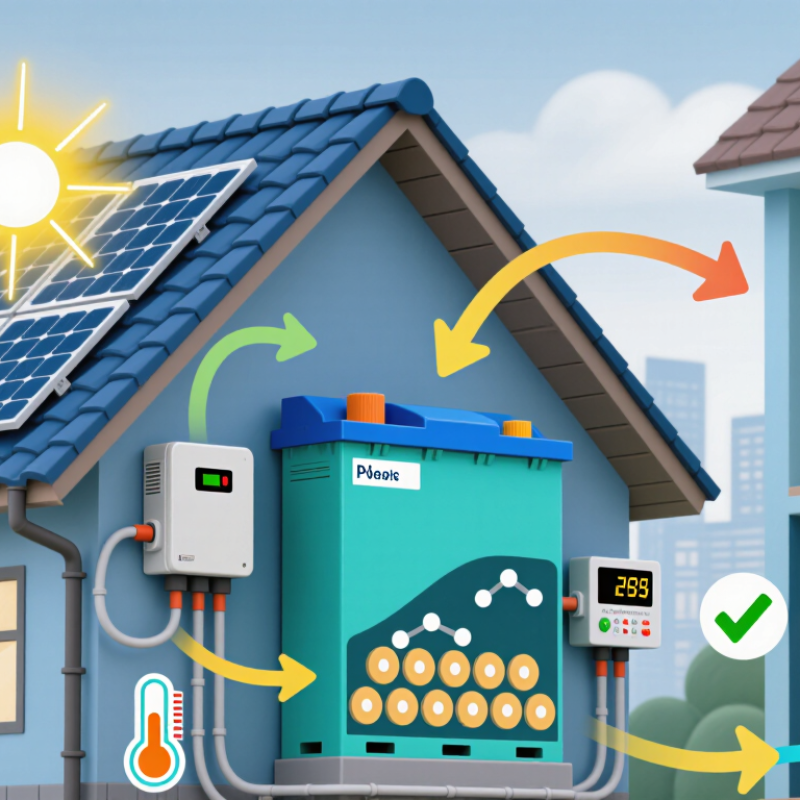
A solar energy battery stores energy produced by solar panels for later use. It does not store sunlight itself. During daylight, panels generate direct current, and the battery converts that energy into chemical energy inside its cells. When the home needs power, the process reverses. An inverter then changes the battery’s direct current into alternating current for household appliances.
Most residential systems use rechargeable lithium-based cells because they offer high energy density and efficient daily cycling. Battery capacity is measured in kilowatt-hours, or kWh. A 10 kWh battery may not provide 10 kWh in practice. A reserve level protects the cells, while conversion losses reduce usable energy. That detail is easy to overlook.
Think of the battery as a carefully managed energy reservoir. A battery management system monitors voltage, temperature, and charging speed. It can disconnect the system when conditions become unsafe. In real installations, shaded panels, cold weather, and heavy evening loads affect performance. A battery rated for several hours may last much less during electric heating. The simple picture helps, but it is incomplete. Batteries also age. After many cycles, their available capacity gradually declines, so installation records and actual household use matter more than a headline rating.
Solar panels generate direct current when sunlight strikes their semiconductor cells. An inverter then manages this electricity for household use and battery charging. The battery stores surplus power during bright hours. After sunset, it sends electricity back through the inverter as usable alternating current. According to the IEA PVPS Trends 2024 report, global solar photovoltaic capacity exceeded 1.6 terawatts by the end of 2023. That scale reflects rapid deployment, but output still changes with clouds, temperature, shading, and panel angle.
The charging path is not perfectly efficient. The U.S. Department of Energy reports that lithium-ion battery systems commonly achieve about 85–95% round-trip efficiency. In simple terms, some stored electricity becomes heat during charging and discharging. A practical system also needs a charge controller, safety monitoring, and energy management software. The neat diagram lies a little. Real household demand rarely matches solar production exactly. A battery can reduce this mismatch, but it cannot create extra sunlight. The National Renewable Energy Laboratory also notes that photovoltaic performance depends strongly on location and system design.
Tips: Check the battery’s usable capacity, not only its advertised capacity. Compare round-trip efficiency and warranty conditions. Keep panels clear of shade, even partial shade. Review monthly production data before changing settings. A larger battery is not always better. Oversizing can leave capacity unused, especially in mild weather. Test the system during cloudy weeks, when assumptions become visible.
Solar batteries do more than store electricity. They manage timing, power flow, and household demand. Solar panels produce direct current when sunlight reaches their cells. An inverter changes this energy into alternating current for ordinary appliances. Extra power can charge the battery instead of leaving the property unused.
Inside the battery, a management system monitors voltage, temperature, and charge level. It limits charging when the cells approach capacity. It also releases stored energy when solar production falls, such as after sunset or during cloudy weather.
A control system decides whether power should serve appliances, charge the battery, or move to the grid. The decision can change within seconds.
The process is not perfectly efficient. Some energy becomes heat during conversion and storage. Battery capacity also declines with age, heavy use, and unsuitable temperatures. A simple display may show 80 percent charge, but that figure does not guarantee 80 percent usable energy. Installation quality matters greatly. Clear wiring, ventilation, protective equipment, and professional testing reduce practical risks.
The neat diagram is misleading. Real homes have changing loads, sudden weather shifts, and imperfect forecasts. Monitoring daily energy patterns can reveal whether the battery is genuinely helping or merely cycling too often. That reflection is important before increasing storage capacity.
Solar batteries store electricity as direct current, or DC. Household appliances normally use alternating current, or AC. The inverter manages this conversion.
During a nighttime test, I watched a battery power a lamp, router, and refrigerator. The inverter changed the battery’s DC output into stable AC electricity. Its control system also matched voltage and frequency with the home circuit. Without that adjustment, sensitive electronics could behave unpredictably.
It monitors battery temperature, charge level, and electrical demand. A battery management system can reduce output when cells become too hot or deeply discharged. When a refrigerator starts, it may briefly demand much more power than its running rating. The inverter must handle that surge without shutting down.
I once assumed a full battery could run every appliance easily. That explanation was too simple. Heating devices, pumps, and ovens consume energy quickly. Cable length, inverter efficiency, and battery age also affect real performance. A system rated at five kilowatts may deliver less usable energy after conversion losses.
Installers usually separate essential circuits from heavy household loads. Lights and communication equipment may remain powered during an outage, while large heaters stay disconnected. Correct grounding, ventilation, protection devices, and local electrical compliance matter. A qualified technician should verify these details before operation, especially when the system connects with the public grid.
How to Understand How Solar Energy Batteries Work?
How Battery Systems Operate During Grid Outages and at Night
Solar batteries store electricity produced during daylight and release it when panels stop generating. At night, the battery sends direct current to an inverter. The inverter changes it into usable alternating current for household appliances. A control system constantly measures power flow, battery charge, and household demand. Quietly, it decides whether to charge, discharge, or draw from the grid.
During a grid outage, the system must separate the home from utility lines. This prevents electricity from flowing backward onto repair crews’ equipment. A properly installed backup system switches within seconds, although timing varies by equipment and load. It may power selected circuits, such as lights, refrigeration, internet equipment, and medical devices. Large heaters and electric vehicle chargers can drain the battery quickly. They need careful management.
At night, battery performance depends on stored energy, temperature, and household habits. A battery showing 80 percent charge is not always fully available. Reserve settings protect its lifespan and maintain emergency capacity. During several cloudy days, the system may need lower consumption or limited grid support. This is where expectations often fail. Storage cannot create energy; it only shifts energy across time. I would check real evening usage before choosing capacity, rather than trusting a simple appliance list. Professional commissioning, ventilation, electrical protection, and regular inspections also matter. Small details matter.
The battery stores direct current, or DC. The inverter changes it into alternating current, or AC, for home appliances.
It monitors voltage, frequency, battery temperature, charge level, and household demand. It also manages sudden changes in power use.
Not always. Ovens, heaters, pumps, and chargers can consume energy quickly and may overload a smaller system.
A refrigerator may briefly draw much more power when its compressor starts. The inverter must handle this startup surge.
Essential circuits may include lights, routers, refrigeration, and selected medical equipment. Large heaters may remain disconnected.
The backup system separates the home from utility lines. This helps prevent dangerous reverse electricity flow during repairs.
A correctly installed system may switch within seconds. Actual timing depends on the equipment and connected loads.
No. Reserve settings, temperature, battery age, and system losses can reduce usable energy. The display is not the whole story.
No. It only shifts stored energy from one time to another. Several cloudy days may require lower consumption.
Check real evening usage, ventilation, grounding, protective devices, cable length, and local electrical requirements. Small details matter.
Conversion losses, battery condition, cable length, and demand can reduce actual output. Ratings can look better than real performance.
It may be too simple. Measure actual usage, startup surges, backup priorities, and reserve needs before making a decision.
Understanding how does a solar energy battery work begins with recognizing that it stores electrical energy produced by solar panels for later use. Solar panels convert sunlight into direct current electricity, while a charge controller regulates the flow to protect the battery and support safe, efficient charging. The battery stores this energy chemically and releases it when household demand increases or sunlight is unavailable.
When power is needed, an inverter converts the battery’s direct current into alternating current that common household appliances can use. A monitoring and control system manages charging, discharging, energy priorities, and battery protection. During the day, the system can supply appliances directly while storing excess electricity. At night or during a grid outage, the battery can provide backup power, helping maintain essential lighting, communication devices, refrigeration, and other selected loads until stored energy is depleted or solar generation resumes.

Suntherra Battery